
Children’s Librarian Book Reviews
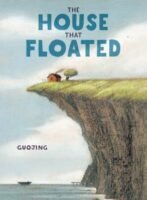 The House That Floated by Guojing
The House That Floated by Guojing is a wordless picture book about a couple who fish together and raise a child, while living in a tiny red house on a cliff. They befriend dolphins and the man carves a red dolphin out of wood. He passes this carving skill on to their son. Time passes and the water rises, so that the clifftop becomes the shore. The family puts their house on a raft and tugs it out to sea. Guided by a lighthouse, they find a new land. The local people help them raise their house to the cliff by the lighthouse.
The soft colors are in a limited range, so that each color counts, like the red of the house, and the pink flowers on the tree they must leave behind. The layout is like a comic book or graphic novel, with as many as seven pictures on a page, as well as two-page spreads for their journey to their new home. Sometimes a minute passes between pictures, sometimes a year. Without words, the “reader” must read the pictures, discover the story that links this all together. The mood is bittersweet at times, but ultimately lovely, with the interwoven themes of home, family, and time.
Recommended for ages 5 and up, preferably a parent and child discussing what they think is happening, as they go along. There is also a subtle environmental message beyond the book, which grade-school kids can appreciate.
Chi’s Sweet Home by Konami Kanata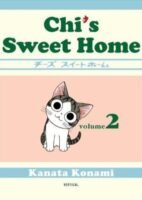
Chi’s Sweet Home is a manga series (but read left to right, Western style) by Konami Kanata, with the spin-off Chi’s Sweet Adventures. Chi is an adorable and very curious kitten who wanders off from her mother and finds a new home with the Yamada family. Unfortunately, the Yamadas live in an apartment building that doesn’t allow pets. The family has to hide the cat from the superintendent, but Chi has a tendency to wander off and have little adventures. Both indoors and out, she learns how the world works, although sometimes drawing the wrong conclusions. The English translation is smooth and funny, and the full-color pictures are vivid and bright, capturing the different moods, including sadness when Chi remembers her mama. I recommend this to fans (ages eight to adult) of manga and/or of cats.
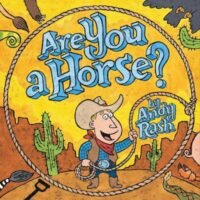
Are You a Horse? is a laugh-out-loud story about a cowboy who gets the gift of a saddle, without knowing what a saddle is, or a horse! He talks to everyone and everything he meets, in his bumbling but scientific way asking, “Are you a horse?” He starts with a rusty wagon telling him, “A horse is a living thing,” and comes closer and closer, until he meets a four-legged creature eating grass. But when he hears, “I’m not a horse, I’m a zebra,” he becomes very upset. In the last five pages, he and the readers get surprises.
This picture book works well in a group setting but would also be a good fit for a parent (especially one who likes to do funny voices) and child (ages 2 to 7) looking for a silly but educational Year of the Horse read-aloud.
 Cats in Construction Hats by Sudipta Bardhan-Quallen & Leeza Hernandez
 Just Like Millie by Lauren Castillo
Imagine a Day by Sarah L Thomson and Rob Gonsalves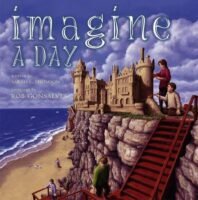
Imagine a Day is a 2005 picture book that pairs poetic text by Sarah L. Thomson with surreal paintings by Rob Gonsalves. Together, they create a dream-like world where children create, build, and explore. The illustrations in particular are worth poring over, because they are like M.C. Escher’s art, bending dimensions and reality. Recommended for children 4 and up, and any adults who recognize that picture books don’t have to be simple.
 Volcanoes, written by Nell Cross Beckerman and illustrated by Kalen Chock
Volcanoes is children’s nonfiction that is as gorgeous and entertaining as the finest picture books. Beckerman’s style is simultaneously simple, poetic, dramatic, and, of course, informative. For instance, one page says in large font, “POP?!” and then the page opposite explains what a volcano is. Even the spacing of the words affects the “story.”
Chock’s lovely but sometimes rugged illustrations provide perfect support for the words, while telling their own story, as with the range of colors. One nighttime scene is in shades of purple, but red and orange weave their way through the book. Nature is represented as not just volcanoes but green islands in a blue sea, and star-speckled skies. Humans are part of this story, from distant silhouettes to close-ups of sturdy shoes as people watch the volcano, “Oozing like thick, hot honey. Glowing taffy.”
This book is recommended for aspiring scientists as young as three, since parents can decide how much of the text to read, and even little ones would enjoy the pictures. Yet there’s enough here to hold the interest of reading-on-their-own older kids, up to about age ten.
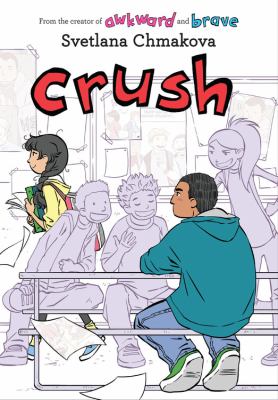 Crush by Svetlana Chmakova and
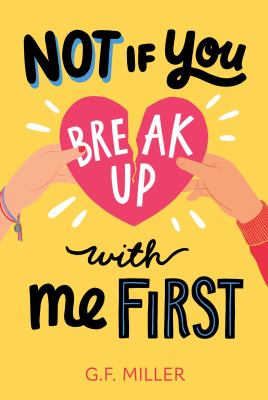 Not If You Break Up with Me First by G.F. Miller
Both Crush and Not If You Break Up With Me take humorous looks at the complicated interpersonal dynamics of middle school, from peer pressure to friendship to dating, especially various forms of communication and miscommunication. In Chmakova’s graphic novel (Book Three in a series but it works well as a stand-alone), Jorge is a big, tough, but considerate boy, who uses his strength for good, earning him the nickname of “Sheriff.” However, he is very quiet, especially around his crush. Miller’s novel alternates between the third-person perspectives of best friends Eve and Andrew, who are pressured into becoming a couple and then find themselves scheming to each get the other one to dump them. In both stories, friends, enemies, and frenemies make everything more difficult, especially when they’re trying to help.
Chmakova and Miller in their different ways explore all the mishaps and eventual resolutions with surprising depth, while keeping the characters relatable, even as we wish we could save them from impending disasters. Both books are funny, although Chmakova’s humor is generally gentler. (Miller’s book would actually make a great graphic novel, too, and I can see either story as a movie, or short-run television series.) Jorge, his crush Jazmine, Eve, and Andrew all get happy endings (as do some of the supporting characters), but not necessarily the happy endings they’re expecting.
These books are recommended for ages 10 and up.
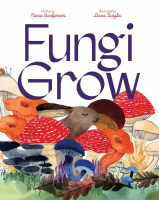 Fungi Grow by Maria Gianferrari
Fungi Grow is a beautifully illustrated nonfiction book that offers fungal facts in a clear and yet poetic way. Children as young as three can enjoy the watercolor pictures and the text with larger font. Smaller, less simple but still approachable text offers more information for kids at old as 9 or 10. Gianferrari shows that fungus can be deadly but also beneficial, and always interesting.